



Marigold Jaguar – BP
AED 25.00
| Weight | 0.03 kg |
|---|
2 in stock
Description
Description
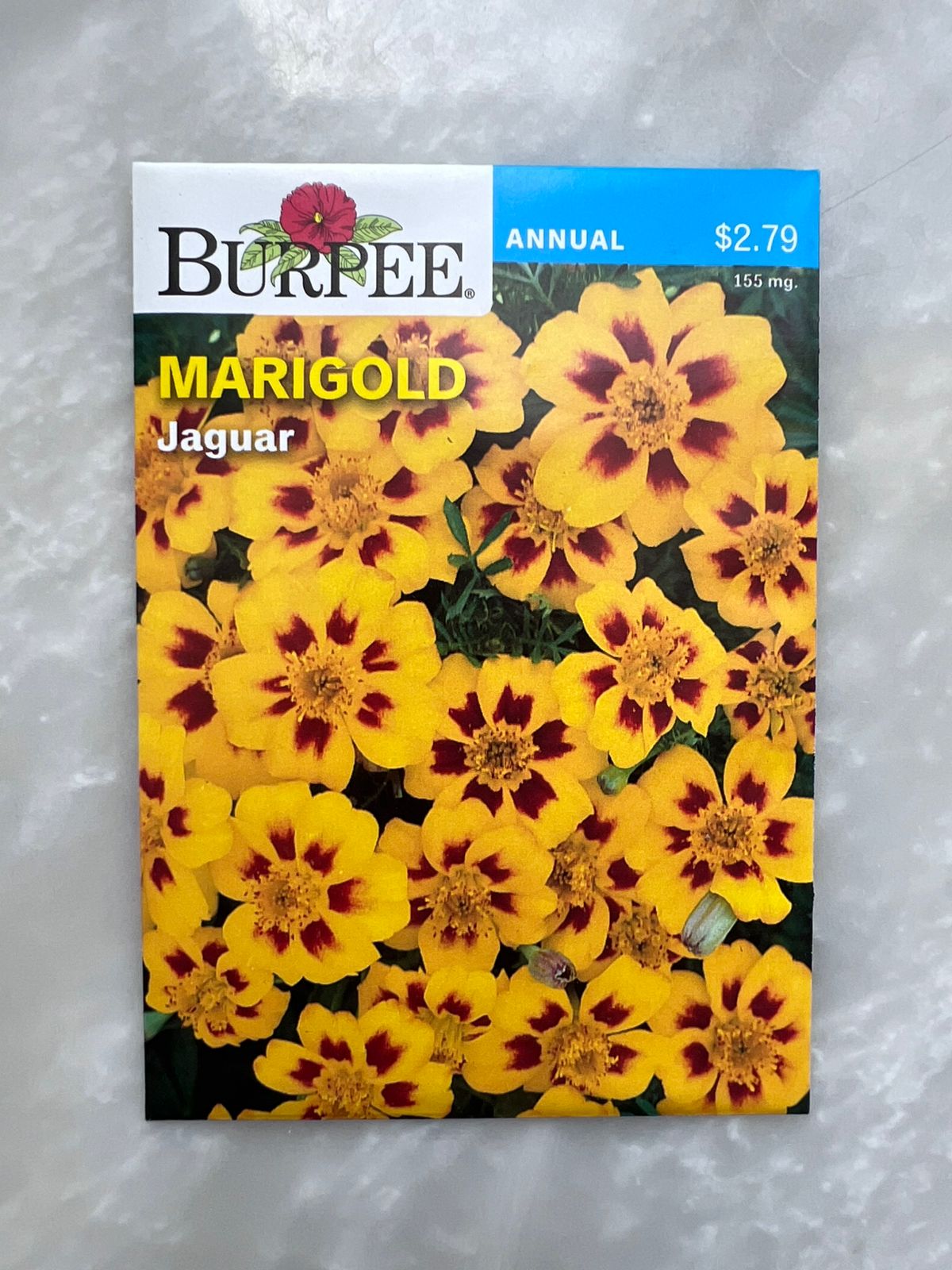
Marigold Jaguar is a vibrant flowering marigold variety known for its large, fully double blooms in rich golden-yellow and orange tones. The compact, bushy plants produce abundant flowers and are excellent for flower beds, borders, containers, vegetable gardens, and companion planting. Marigolds are popular in organic gardens because their strong-scented foliage and flowers can help attract beneficial insects and add biodiversity to the garden. The bright blooms also provide a valuable source of nectar for pollinators.
When to Plant in the UAE
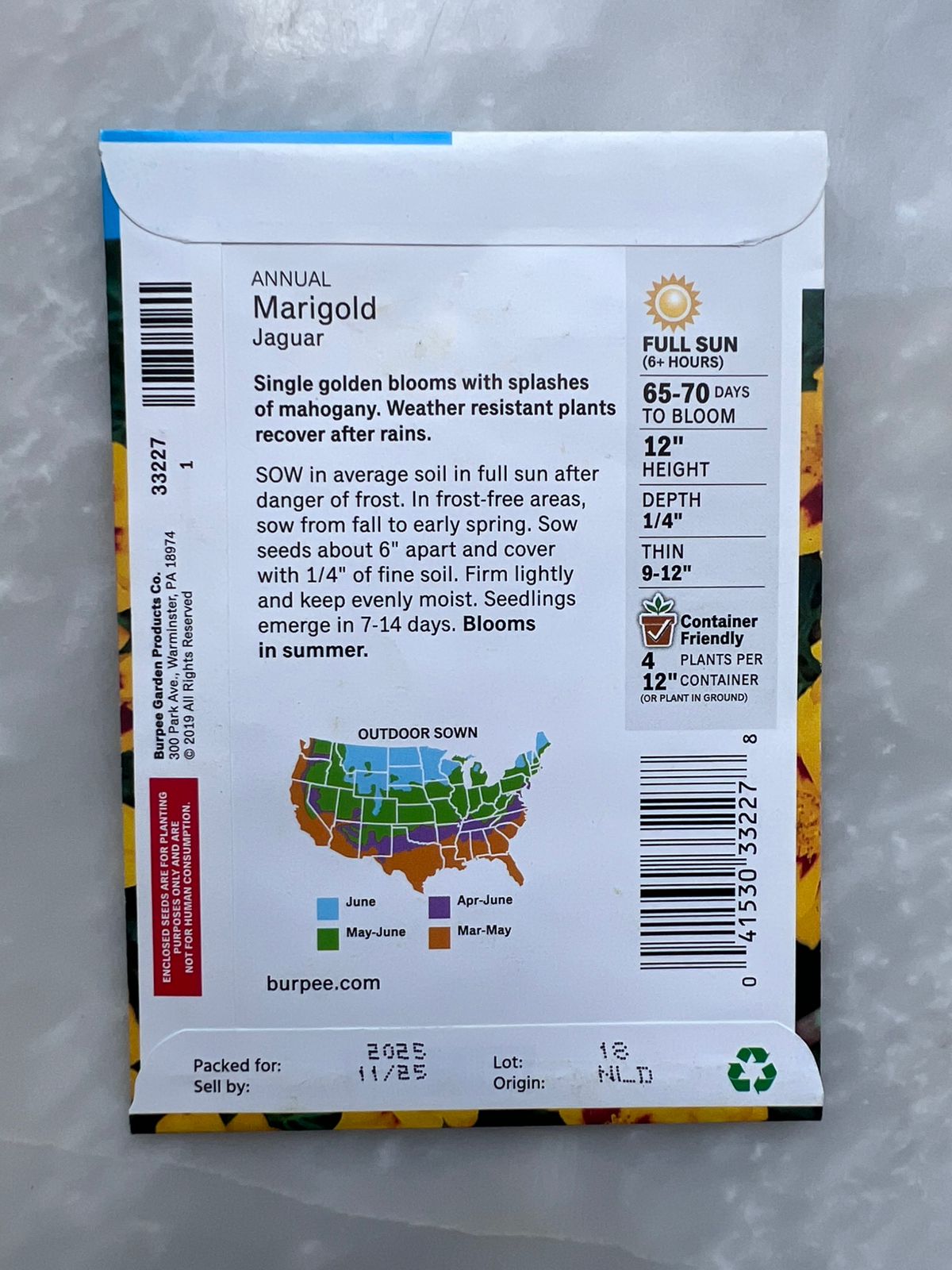
- Outdoors: Direct sow seeds throughout September.
- Best results: Plant during the transition into the cooler growing season.
- Avoid: Peak summer heat, as extreme temperatures can reduce germination, stress young plants, and limit flowering.
Planting & Care Tips
- Light & Soil: Grow in full sun in fertile, well-draining soil enriched with compost and organic matter.
- Depth & Germination: Sow seeds approximately 0.5–1 cm deep. Germination typically occurs within 5–10 days under warm conditions.
- Spacing: Space plants approximately 20–30 cm apart, with 30–45 cm between rows.
- Watering: Keep the soil consistently moist during germination and early growth. Once established, water moderately and allow the soil surface to dry slightly between watering.
- Feeding: Add compost before planting. Use a balanced organic fertilizer if needed, but avoid excessive nitrogen, which can encourage foliage instead of flowers.
- Flowering: Plants generally begin flowering approximately 45–60 days after sowing, depending on growing conditions.
- Deadheading: Remove spent flowers regularly to encourage continuous flowering and maintain a tidy appearance.
- Companion Planting: Marigolds are commonly grown alongside vegetables and herbs in home gardens to add flowers and biodiversity.
- Pollinators: The bright flowers attract bees, butterflies, and other beneficial insects.